How to Sell AI-Generated Art in 2026: Best Platforms, Pricing & Getting Started

Sell AI Art Online
— in 2026
Platforms · Pricing · Legal basics · Action plan
🎨 Etsy shops earning $200–$2K+/monthWhat AI Art Actually Sells?
- ✅
Fantasy / sci-fi landscapes — wallpapers, prints, gaming communities
- ✅
Minimalist designs — t-shirts, mugs, phone cases
- ✅
Vintage & retro aesthetics — shareable, strong social appeal
- ✅
Nature & botanical — consistent home décor demand
- ❌
Generic sunsets / "fantasy girl" — oversaturated, hard to differentiate
- ❌
Photorealistic AI portraits of real people — legal risk + platform restrictions
Platform Comparison
| Platform | Best For | Your Cut |
|---|---|---|
| Etsy | Digital downloads, POD | ~80% |
| Redbubble | Passive POD | ~20% |
| Merch by Amazon | Massive reach | 15–37% |
| Adobe Stock | Stock licensing | per download |
| Gumroad | Bundles, direct sales | 90% |
How to Price Your AI Art
For POD: aim for 30–50% margin after platform cut. If Printify charges $12 for a mug → list at $24–$28.
5-Step Action Plan
- 1️⃣Pick one niche (fantasy, minimalist, retro — whatever you can generate consistently)
- 2️⃣Generate 20–30 images. Curate ruthlessly — only keep what looks great at full size
- 3️⃣List on Etsy or Redbubble first (built-in traffic, lower barrier)
- 4️⃣Upload to Adobe Stock simultaneously — volume takes time, so start early
- 5️⃣Track views & sales. Double down on what works; iterate based on real data
What Kind of AI Art Actually Sells?
Not all AI art sells equally well. Before picking a platform, it helps to know what buyers are looking for. The sellers who earn consistently have a defined niche and recognizable aesthetic — even if AI is doing the generation. High-demand styles include fantasy and sci-fi landscapes, minimalist designs for print-on-demand, vintage and retro aesthetics, nature and botanical prints, and logo-adjacent graphics for small businesses.
What sells less well: generic landscapes with no distinct style, oversaturated categories without differentiation, and photorealistic AI portraits of real people (legal risk and platform restrictions apply).
Best Platforms for Selling AI Art in 2026
Etsy remains the largest marketplace for creative digital goods and print-on-demand products. AI art sells well as digital downloads (printable wall art, clipart bundles) and POD products via Printful, Printify, or Gelato. Etsy requires disclosure of AI-generated content. Earning potential: $200–$2,000+/month for established shops with 50+ listings in a focused niche.
Redbubble / Merch by Amazon handle printing, shipping, and customer service. You upload designs; they do the rest. Best for passive income with minimal ongoing effort — though traction takes months and dozens of designs.
Adobe Stock is currently the most AI-friendly major stock platform. Images must be clearly labeled AI-generated. Earning potential: $0.25–$2.00 per download. Volume is everything — you need hundreds of accepted images to earn consistently.
Gumroad / Shopify let you keep 90%+ of revenue with direct sales. Gumroad is the easiest entry point (free to start, 10% fee). Great for digital art packs, prompt libraries, and tutorials.
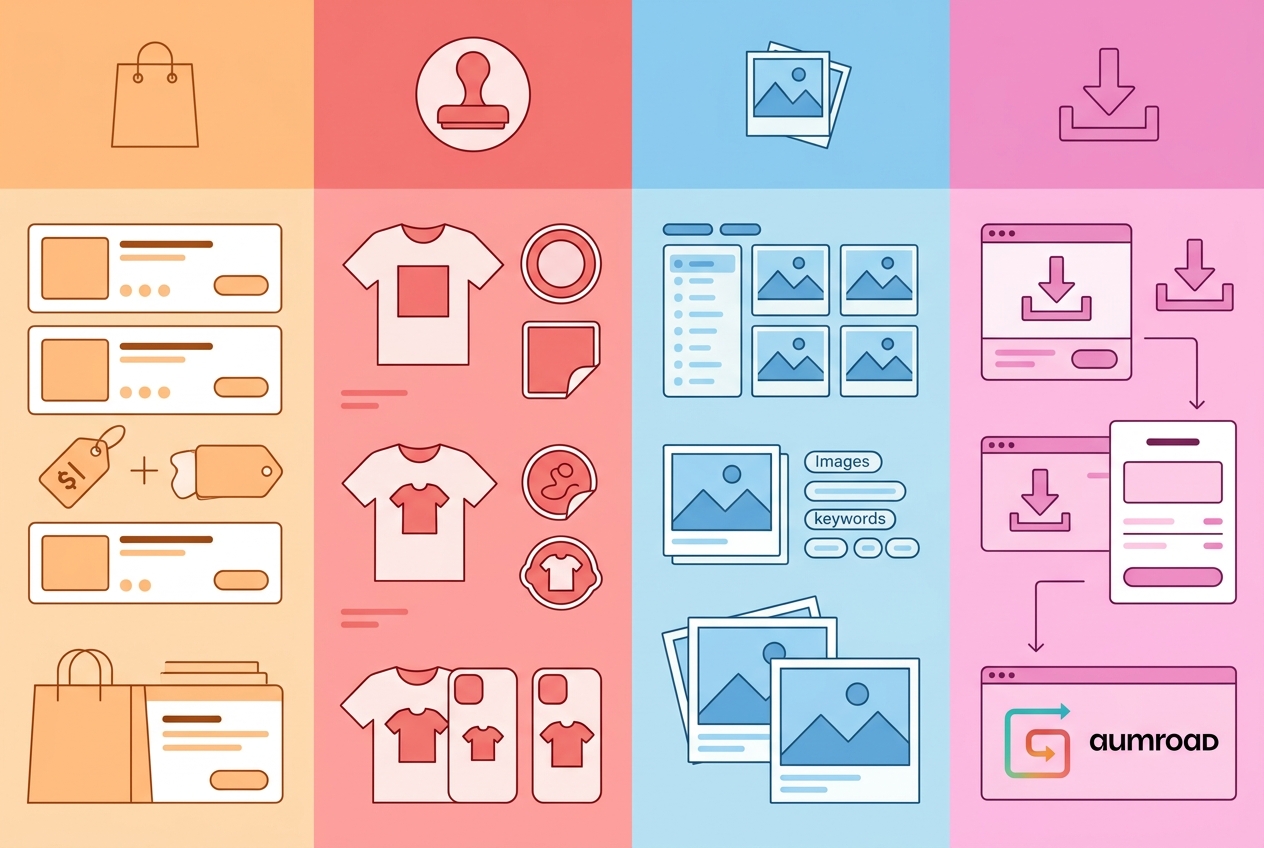
| Platform | Commission | Audience | AI Art Policy |
|---|---|---|---|
| Redbubble | ~20% of sale | Large, global | Allowed with disclosure |
| Merch by Amazon | 15–37% (tiered) | Massive (Amazon) | Allowed; strict quality review |
| Zazzle | 5–99% (you set) | Home décor, gifts | Allowed |
| Society6 | 10% base | Art-focused buyers | Allowed |
The Legal Side: What You Need to Know in 2026
AI art and copyright law is still evolving. In the US, purely AI-generated images without significant human creative input are not copyright-protected under current law (subject to ongoing litigation). You can still sell AI art — lack of copyright just means you can't always stop others from copying it. Most major platforms now require disclosure that art is AI-generated. Always disclose AI involvement where required, avoid generating images that closely mimic specific living artists' styles, and don't generate images of real, recognizable people for commercial use.
What Actually Makes Money: A Realistic Look
The people earning consistently with AI art in 2026 share a few traits. They have a niche — "cozy fantasy cottage printable art" outperforms "cool AI art." They treat it like a business: SEO research on keywords, good mockup photography, consistent uploading, and learning from what sells. They stack platforms so the same design earns across Etsy, Redbubble, Adobe Stock, and Gumroad simultaneously. And they add value beyond raw generation — curation, editing, color grading, and niche expertise all justify pricing above commodity level.
📎 Related Posts
- Best AI Image Generators in 2026: Midjourney, ChatGPT, Ideogram & More Compared
- How to Use Midjourney V7: A Beginner's Complete Guide (2026)
- How to Make Money with AI in 2026: 7 Side Hustle Ideas That Actually Work
- Best AI Tools for Freelancers in 2026: Save 10+ Hours Every Week
- How to Use AI for Content Creation: 6 Practical Workflows That Actually Work (2026)
Disclaimer: Platform policies, commission rates, and legal frameworks around AI-generated content change frequently. The information in this post reflects May 2026 conditions. Always verify current policies directly with each platform before listing your work commercially.


